Monday, November 16, 2009

Spider Silk, Artificial Muscle?


While scrolling through the discovery channel website, I cam across this article and it immediately jumped out at me. Scientists at the University of Akron have been researching ways to use spider silk, which is known for being lightweight and having steel fibers, for artificial muscle. One of the head scientists, Professor Todd Blackledge, said “No one ever thought about using spider silk as an artificial muscle” . I was drawn to this because it reminded me of the modern day invisionaries who were combining two different types of science, this being the anatomy of muscles and the silk from spiders. Not only did this relate to our current class discussions, it is also a major breakthrough in modern medicine because it could help replace muscle tissue in those who couldn't grow it back.
The reason that this silk can be used as artificial muscle is that the silk contracts when touched with water, just as human muscles do. The new spider-silk muscle would have degrees of movement, just as human muscle does. That movement would depend on how much water is in the air around the muscle. The type of contraction is called a cyclic contraction, and could be used in microelectromechanical systems, which are tiny devices used on very small scales, such as separating individual cells. The cyclic contraction based spider silk would open and close a tiny channel to separate individual cells.
This type of artificial muscle is better than others that are currently used because it can last a lot longer than its counter parts. Though there are current artificial muscles that are superior to spider silk in terms of speed of contraction, they only last a couple hundred cycles and need high amounts of electricity or toxic chemicals to activate.
This could impact the world in a huge way, because it would have a new artificial muscle that could help people who's muscles are deteriorating due to a disease, or any other reason. The scientists have also been researching ways to make this into a power generator, though it has been difficult to find more information on this. This could be used also in prosthetic limbs, to make the muscle more real, and maybe even one day to create a fully functioning prosthetic limb.
Finds like these interest me because if perfected, this could be such a large scientific breakthrough and could help millions of people, and the materials used would be from a natural source.


Bland, Eric. "Spider Silk Used as Artificial Muscle : Discovery News." Discovery News: Earth, Space, Tech, Animals, Dinosaurs, History. Discovery Communications LLC, 8 Nov. 2009. Web. 09 Nov. 2009. .

Sunday, November 15, 2009

Children's Peace Monument

I decided to choose the “Children’s Peace Monument” also called the “Tower of a Thousand Paper Cranes” located at the Hiroshima Peace Park in Hiroshima Japan. This monument was sponsored by Hiroshima and Students Association for the creation of peace. The design was made by Kazuo Kikuchi, a professor at Tokyo National University of Fine Arts and Music. This monument was unveiled on May 5th 1958. The golden bell that hangs inside the monument in the shape of a crane was added and produced in 2003.
During the summer of 2007, I traveled to Japan with a group of students to volunteer in a preschool in Fukuoka Japan. While I was in Japan, the group of students and the chaperones that I traveled with took a trip to the Hiroshima Peace Park. While I was there I had the chance to look at a variety of different pieces of art, one being the Children’s Peace Monument. This particular monument stood out to me because I remembered reading the book when I was in fourth grade, and I also was interested in the art of paper cranes. My sister and I had been making paper cranes for a while, and it was amazing to see this monument and look at the millions of paper cranes people from all around the world had sent.
There is the one main monument that stands in the center of a circular plaque, and behind the monument there is several glass boxes filled with millions of paper cranes that people have sent from around the world. The paper cranes in the boxes create pictures, and are also a variety of several different colors. This makes the glass boxes very appealing to look at, and it draws your attention very quickly. It is almost impossible to look at all the paper cranes, what they are made of, and the pictures that they create because there are so many. I did have the chance to look at several of the glass boxes, and also took pictures of some of the pictures that they create.
Next to this monument is a marble plaque that states what the purpose of it is. Engraved on this plaque is “This monument stands in memory of all children who died as a result of the atomic bombing of Hiroshima. The monument was originally inspired by the death of Sadako Sasaki, who was exposed to radiation from the atomic bomb at the age of two. Ten years later Sadako developed leukemia that ultimately ended her life. Sadako’s untimely death compelled her classmates to begin a call for the construction of a monument for all children who died due to the atomic bomb. Built with contributions from more than 3,200 schools in Japan and donors in nine countries, the Children’s Peace Monument was unveiled on May 5th, 1958.” The rest of this plaque states what is located at the top of the monument and also the inscription on the stone plaque that lies under the monument.
This is instrumental art in my opinion because it was built with a purpose, and the monument itself is expressing its purpose, why it is there, and why it is so important. This statue reminds everyone tourist or anyone for that matter about what happened on August 6th, 1945. I think that everyone who looks at this piece of art is reminded about what happened to Hiroshima many years ago. I know that when I looked at this it reminded me of the book that I read while I was in fourth grade, Sadako and the Thousand Paper Cranes.
Paper cranes now have a stronger meaning to me than they did before I visited this monument. They mean more than just a piece of paper. Each time I make a paper crane it reminds me of this monument and what Sadako’s classmates did for her when she was diagnosed with Leukemia. I remember that in this book “Sadako and the Thousand Paper Cranes” the children tried to make Sadako a thousand paper cranes, and if they did this before she died, this meant she would survive. Unfortunately they were very close to this goal, but they did not succeed. Although I do not think that this was the reason she died, I do think that the message in behind it is important. Helping a classmate survive something as horrific as leukemia and doing whatever you can to make that person feel better is such an important thing to do.

Feather Art


Tyler Ury

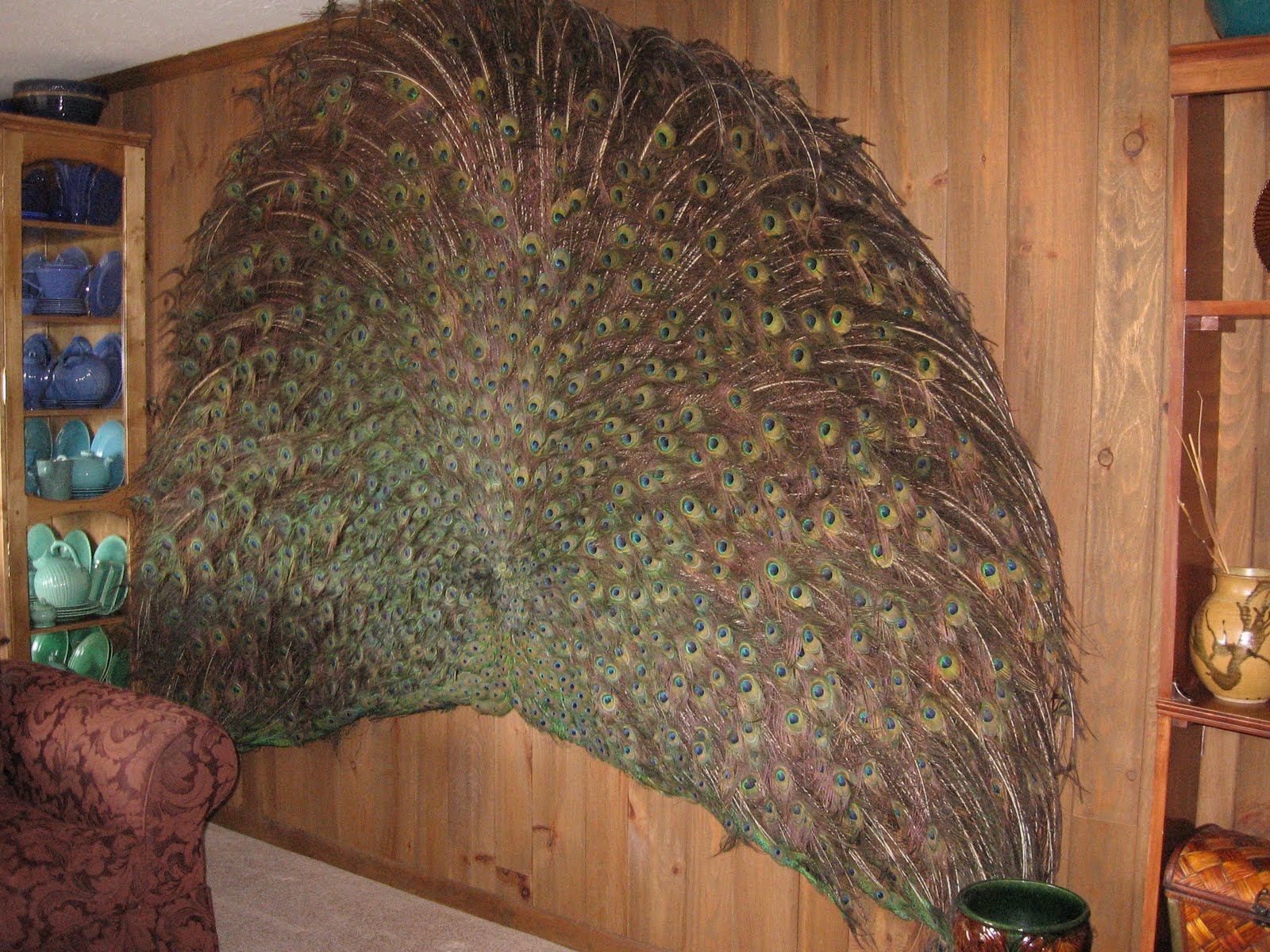
I had a very hard time trying to find something to write about. I looked at pictures on the internet but I did not feel any type of real connection to them. I thought a lot about what I could do it about that would get me excited. Almost like an epiphany I realized what I should do. This piece of art is called “feather shield”, it is a tradition from the Native American Indian men to get or make a shield to represent their transition into manhood. Though I did not make this, the best artist that I know of made this for me. It is made out of goose, golden flicker, and one unknown feather. Every feather that you see was collected by myself. And the wonderful artist that made this for me is Jerrita Lake, my Aunt. The feathers are attached to a piece of drift wood, and made to look like wings. The whole thing is tied to a piece of deer hide. It is so beautifully done that it looks so natural, which shows the skill of the artist. Why do I think this is art? Well for one it is beautifully done and anything of this caliber is art to me. And secondly it really speaks to me. It reminds me of my past and where I came from. But not only that, it shows me of the future and what I can become. Every time I look at it I am reminded of what I went through and of my Aunt. If that does not make it Art then I really do not know what art is. The feather shield is so important to me that I have it hanging in my dorm room. I also have another piece done from her but I will not get into that yet. Even if it did not remind me of so many things the skill that went into making it is an Art in it of itself. I doubt many people on this earth could make such amazing feather art like my Aunt does. It is such an amazing skill that it could only be called an Art!

NOTE: No birds were harmed in any of her works of art!

Cutestest Babies Ever!

Anne Geddes Photography

Okay, so everyone has probably seen Anne Geddes photography before and quite possibly fell in love, much like myself. The babies are absolutely precious and make me just want to snuggle one up. I have always wondered how the photographs were taken and to be entirely honest had no idea that Anne even existed. I always just thought the pictures were called Anne Geddes, I never knew that she was the photographer. So with that I will give a little background on her, she was born on September 13, 1956 in Queensland, Australia. She has three sisters and was raised by her parents on their huge beef cattle property. In her biography it said that she and her sisters were true country kids. Her favorite magazine was Life because of the high value they places on the strength and quality of their photography. She remembers how she was always fascinated by images of people and the concept of a single still image and how it could capture a moment in time that would never be repeated. She started taking photographs when she was 17 to capture her day-to-day adventures working with a tourist hotel chain and worked various jobs throughout her young adulthood She got married in 1983. She quit her job and decided to open her own business taking pictures of neighbors and friends children at their homes, gardens and local parks. She advertised her business by posting something on her local community board. She moved back to australia in 1984 where she and her husband had their first daughter. Their second daughter was born in 1986, the same year Anne entered her first photogenic contest and came in second. Her first published work came out, in a local magazine, in 1988 which was first taken of a little girl named Gemma in her backyard studio.
After this photo became popular Anne decided to work specifically with children. In 1992 her husband left his highly successful career and became her business partner, that same year they began producing Anne Geddes cards. She used her cards and calendars to raise awareness of child abuse. Anne and her husband, Kel, sold the calendars from the back of their family car and raise more than US 20,000 to help prevent child abuse and neglect. After selling their house and investing their life savings into producing 20,000 copies of the calendar, turing those profits into producing 20,000 more copies Anne and Kel finally had an offer from a publishing company. In 1996 Anne created her Down in the Garden series and went on the Oprah show, which caused even more recognition world wide.
1998 was the year her first book, Until Now was published in eight different languages and she went on a world wide book tour. By the year 2000 more than 14 million Anne Geddes books had been sold worldwide! She created a baby clothing line in 2001 with the babies comfort in mind. Anne and Kel were very close to a young 8 year old girl who had cancer and who was a huge fan of Celine Dion. It just so happened that Celine Dion was a fan of Anne, so Anne asked if Celine would call the little girl at the hospital. After Anne called Celine to thank her for the call they realized they had some common interests and that Celine was pregnant. Anne wanted to photograph Celine's son, so the two worked together. They also created the music video for Celine's song Miracle with photographs Anne had taken. It was published in 22 countries and 11 different languages in 2004.
Anne and her husband continue to donate large amounts of money to charitable funds. Anne published an autobiography in 2007 titled, A Labor of Love. She also wrote Cherished Thoughts with Love(2005) and Be Gentle with the Young(2008). Early this year Anne was awarded a Lifetime Achievement Award by the Professional Photographers of America. Her two daughters now work beside her in her Sydney, Australia studio. She has sold more than 18 million copies of her books worldwide, translating into 24 languages and he images have been published in 83 countries.
The photo shoots are always very quick, usually lasting around two to three minutes. The studio plays soft soothing music and the temperature is set around 83 to keep the babies warm and cozy. Anne is said to be very professional, quick, and efficient.
I definitely consider Annes photographs art. They are not only aesthetically pleasing, especially to a baby lover like myself, but they are very thought out and clever. I would say that her photography is definitely emotionalist because her photos evoke a variety of emotions from people. They could also be seen as formalist though because of the techniques, lighting, alignment and subject.
Do you enjoy her photographs, why or why not? Would you consider them art? What quartet do you think they fit into?

Annegeddes.com
http://www.annegeddes.com/modules/Anne/Galleries/index.aspx

Wednesday, November 11, 2009

Neil Young- Don't Be Denied

Matt Kavanagh
Neil Young- Don’t Be Denied

http://www.youtube.com/watch?v=e-972pm8AhQ

The song Don’t Be Denied by Neil Young was released on his 1973 live album Times Fade Away, which consisted of all new material. The album itself never made the transformation from vinyl to CD, so the only way to hear the album without an original record is to pirate it from the internet. Anyways, the album tour was a complete mess to say the least. Neil’s former Crazy Horse bandmate Danny Whitten had recently died of heroine overdose and Neil toured with a backing band called The Stray Gators, of who received poor reviews from audiences. Also, Neil and his fellow musicians proved to be intoxicated at all times and Neil was said to be mentally unstable as the tour ended.
This is the recording from the album as it was released more the thirty years ago. In the song, Neil sings about his childhood, everything from his Dad leaving home, and him trying to make it as a musician. The chorus sings “Don’t be denied” over and over inspiring the listener to never give up, just as Neil had to do has he faced his share of hardships while growing up.
I think this is definitely a form of emotionalist art for Neil Young is clearly putting all he has into trying to sing in key, as he also was suffering with a throat infection. Full of voice cracks and the possibility of a complete breakdown at any moment, Neil Young and the Stray Gatos put on an intense performance. It may be stretching it but this may also be instrumental art for it may inspire people. Maybe not this song in particular but Neil Young certainly has some songs that I’ve gained a strong connection to so in general, Neil could be called a instrumental artist as well as an emotionalist.
The reason I choose to do a Neil Young song for a blog is because he is my favorite artist and I believe he is pure genius. The song Don’t Be Denied relates well to last years Concept of Self class when we were all asked to design a self -portrait of ourselves. This song tells the story of Neil Young growing up until he was about the age we were when we did those projects so in a way it’s his own self portrait, just through song.

Source
Mcdonough, Jimmy. Shakey Neil Young's Biography. New York: Anchor, 2003. Print.
"Don't Be Denied"

When I was a young boy,
My mama said to me
Your daddy's leavin' home today,
I think he's gone to stay.
We packed up all our bags
And drove out to Winnipeg.

When we got to Winnipeg
I checked in to school.
I wore white bucks on my feet,
When I learned the golden rule.
The punches came fast and hard
Lying on my back
in the school yard.

Don't be denied, don't be denied.

Well pretty soon I met a friend,
He played guitar.
We used to sit
on the steps at school
And dream of being stars.
We started a band,
We played all night.

Don't be denied, don't be denied.

Oh Canada
We played all night
I really hate to leave you now
But to stay just wouldn't be right.
Down in Hollywood
We played so good

The businessmen crowded around
They came to hear the golden sound
There we were on the Sunset Strip,
Playing our songs
for the highest bid.
We played all night
The price was right.

Don't be denied, don't be denied.

Well, all that glitters isn't gold
I know you've heard
that story told.
And I'm a pauper
in a naked disguise
A millionaire
through a business man's eyes.
Oh friend of mine
Don't be denied.

Tuesday, November 10, 2009

Is Bone Marrow Cure for HIV?


Everyone knows that that HIV/AIDS is big problem in most parts of the world. In Africa in particular it has reached epidemic proportions. For years researchers have been searching for a cure. In November of 2008 Dr. Gero Huetter, a German hematologist, reported that he had successfully treated a patient with the HIV virus in Berlin. The patient, who was a 42-year-old man who had AIDS for over 20 years, underwent a bone marrow transplant for Leukemia. Afterward he showed no signs of HIV. Dr. Huetter had intentionally used bone marrow containing a genetic mutation making the donor immune to the AIDS virus. The mutation prevents the CCR5 molecule from forming on cells. CCR5 is what allows HIV to enter cells. HIV must bond with CCR5 to infect the cells. The mutation is incredibly rare. Only 1% of people of European decent have the recessive mutation and people of Asian, African, and South American descent almost never inherit it. Bone marrow is where the immune system cells are made, which are the cells HIV target. Dr. Huetter’s theory was that if he could replace the HIV positive bone marrow with the mutated bone marrow, it would make the patient immune to HIV. Since the transplant, the virus has remained undetected in the patient for almost two years. Other researchers believe that its possible that the HIV could still be in the patient’s blood stream, but cannot start an infection because the target cells are immune. They call it a “functional cure”. The biggest problem with it is that this cure depends on a bone marrow transplant, which is very painful and dangerous. Such transplants kill about 30% of patients and are usually only given to those in the late stages of cancer. As a result, this cure will probably never be widely used.

Like many other scientific discoveries, this has been met with skepticism. Some scientists in the field are not convinced and want to se more tests done. There will probably be a lot of trial and error as scientists pursue this research. Relating back to what we have been discussing in class, almost all of Newton’s ideas were also initially met with skepticism. He was coming up with theories that were unheard of at the time, however he ended up changing the world of science. Maybe in the future Dr. Huetter’s discovery will have a great impact, just like Newton.

I think this discovery could have a huge impact on research in the future. Even though at this time it does not seem like a realistic cure fore every HIV patient, the doors have definitely been opened. Hopefully with the help of gene therapy this will become a more viable option.

I was drawn to this article because HIV/AIDS is a growing problem in the world. I think this discovery represents new hope for patients with the HIV virus. This may provide researchers with a new direction, and hopefully they can take the knowledge learned from this discovery and develop a cure that is not such a high risk.

Works Cited

Schoofs, Mark. "A Doctor, a Mutation and a Potential Cure for AIDS - WSJ.com." Business News & Financial News - The Wall Street Journal - WSJ.com. Web. 11 Nov. 2009. http://online.wsj.com/article/SB122602394113507555.html.

Monday, November 9, 2009

Photographic Memory in a Pill?


Smith, Dan. "Coming Soon: Photographic Memory in a Pill? | Popular Science." Popular Science | New Technology, Science News, The Future Now. 6 July 2009. Web. 09 Nov. 2009. .

A group of scientists from the Spanish University of Malaga believe that they have found the group of proteins that aid in the retention of visual memories. These proteins, called RGS-14, are created in the visual cortex of the brain. The scientists found that, in rats, the increased production of these proteins led to the retention of visual memory increasing from one hour to 2 months. They determined this by first removing the section of the brain thought to be responsible for photographic memory, the visual cortex, from a number of rats. They then extracted the RGS-14 proteins and injected them into rats whose brains had not been tampered with. They found that the rats that had had their visual cortex removed had virtually no visual memory, while that rats with the addition RGS-14 proteins had a photographic memory 1500 times better than they did naturally. “Memory extension only applies to memories made through the poorly-understood visual cortex of the brain” (Smith). They have determined that this protein may be able to be put into a pill and then ingested by humans, potentially increasing our photographic memory to the same extent of the rats.
I located this information originally through Yahoo! News, but traced it back to many scientific blogs, publications, and, originally, to Science magazine.
I was drawn to this discovery because, as a college student, I often wish that I had a better memory. I wasn’t looking for a scientific breakthrough for my blog, but when I saw this, it caught my eye and made me look further into the discovery. The thought of a pill increasing photographic memory both fascinates and horrifies me, and I felt as though I could use this idea as a springboard for an interesting class discussion.
The impact that this could have on our world is massive. For students in particular, there will be no need to cram for exams, and the information learned in class, visually, at least, would be retained much longer. This pill, however, could be deemed cheating by some institutions, and the integrity of its use in different circumstances would have to be debated.
The scientists are essentially claiming that they have found the protein that enables our brain to process and store visual memories, and if the amount of that protein is increased, retention of visual memories will follow suit. In order to validate this hypothesis, the scientists really did two experiments. The first was questioning the impact of the visual cortex on visual memory. The rats without the visual cortex proved that this part of the brain has a huge role in visual memory. They then used this information to find out what component of the visual cortex was responsible for photographic memory. Once they isolated RGS-14 and tested its effect in high quantities on memory in comparison to normal levels, they found that RGS-14 increased the retention of visual memories significantly.
The fact that this group of scientists used an experimental method and systematic elimination to obtain their results is one element that makes this discovery “scientific.” Another reason that this is “science,” is that it explored what was previously known about the brain, and used that knowledge to further our comprehension of ourselves in a logical, cohesive manner.
This connects to what we are learning in class on multiple levels. This discovery could be considered heretic or immoral according to many parties, but could ultimately lead to a standard of information that is widely accepted and put to use in the coming years. In addition, it connects to our study of the re-envisionaries in that these scientists used existing knowledge in new ways to develop a revolutionary finding.

Additional sources:
Gutiérrez, Antonia, Zafar U. Khan , Manuel F. López-Aranda, Juan F. López-Téllez, Mariam Masmudi-Martín, Irene Navarro-Lobato. "Role of Layer 6 of V2 Visual Cortex in Object-Recognition Memory." Science 3 July 2009: 87-89. Print.